
How These Peptide Bioregulators Support Reproductive Health and Fertility (Men)
These bioregulators work synergistically to optimize reproductive function, maintain hormonal balance, and improve fertility by targeting the pineal gland, kidneys, adrenal glands, reproductive organs, and gonads.
Endoluten (Pineal Gland Bioregulator)
Regulates the production of melatonin, which plays a key role in the balance of reproductive hormones.
Supports circadian rhythm and improves sleep quality – essential for fertility and hormonal regulation.
May improve overall endocrine function by supporting the hypothalamic-pituitary-gonadal axis (HPG axis).
Chitomur (Kidney Bioregulator)
Optimizes kidney function, vital for electrolyte balance and hormone metabolism.
Helps regulate blood pressure – key to maintaining good reproductive health.
Supports detoxification, reducing systemic inflammation that can negatively impact fertility.
Libido (Prostate and Male Reproductive System Bioregulator)
Supports prostate health and spermatogenesis in men.
Improves libido, sexual function, and overall reproductive potential.
Reduces inflammation in the prostate, improving urination and sexual health.
Testoluten (Male Gonadal Bioregulator)
Supports testosterone production and sperm quality.
Works to optimize gonadal health and improve fertility.
Recommended Reproductive Health and Fertility Protocol
This three-month protocol is structured to optimize hormonal balance, support reproductive organ function, and improve fertility. Can be repeated 2–3 times per year for sustainable results.
Protocol:
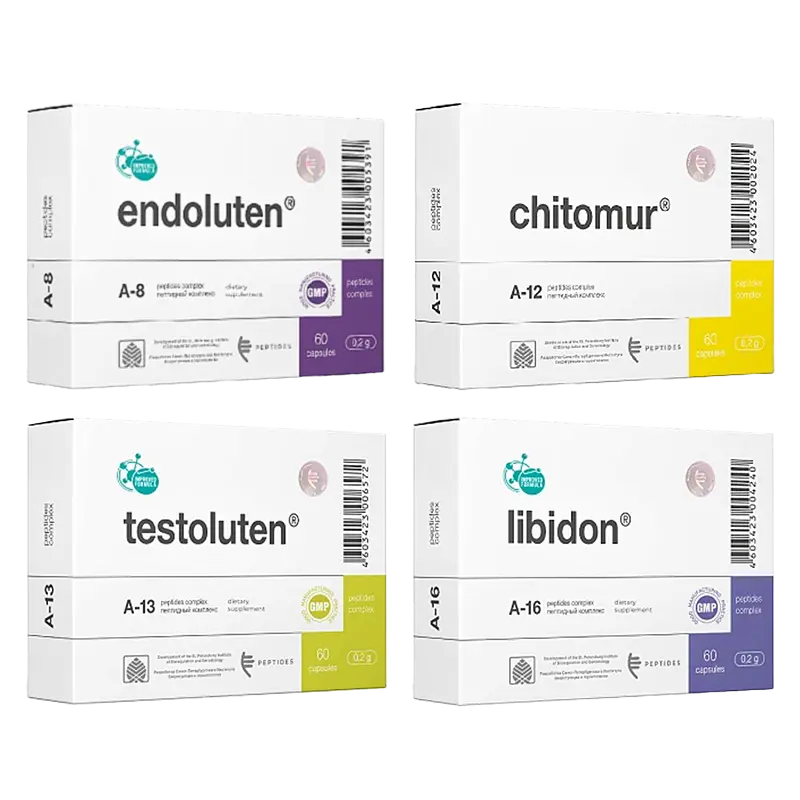
Endoluten – 1–2 capsules daily for 30 days
Chitomur – 1–2 capsules daily for 30 days
Libidon – 1–2 capsules daily for 30 days
Testoluten – 1–2 capsules daily for 30 days
Cycle length:
Take for one month, then take a two-month break before repeating.
Ideally, two cycles per year are recommended, or up to three for men who are actively trying to conceive or have hormonal imbalances.
Additional optimization tips:
Peptide combinations:
Kisspeptin-10, Tesamorelin, Epitalon, and BPC-157 can further support fertility and hormonal regulation.
Nutritional supplements:
Zinc, selenium, CoQ10, omega-3 fatty acids, maca root, ashwagandha, and L-carnitine support male reproductive health.
Lifestyle Factor:
Manage stress, avoid endocrine disruptors (plastics, refined fats), and maintain a nutritionally rich diet for optimal reproductive function.