What does the use of the GASTRO 3 Plus complex contribute?
Restores the mucous membrane
Normalizes the body’s condition in chronic inflammation of the stomach and duodenum, as well as in postoperative complications
Helps with constant heaviness, bloating, intestinal disorders and heartburn
Improves the absorption of trace elements
Normalizes the production of enzymes
Helps restore the functions of the gastrointestinal tract after taking antibiotics
Relieves periodic dull pain after eating
Effective in restoring the functions of the organs of the entire gastrointestinal tract
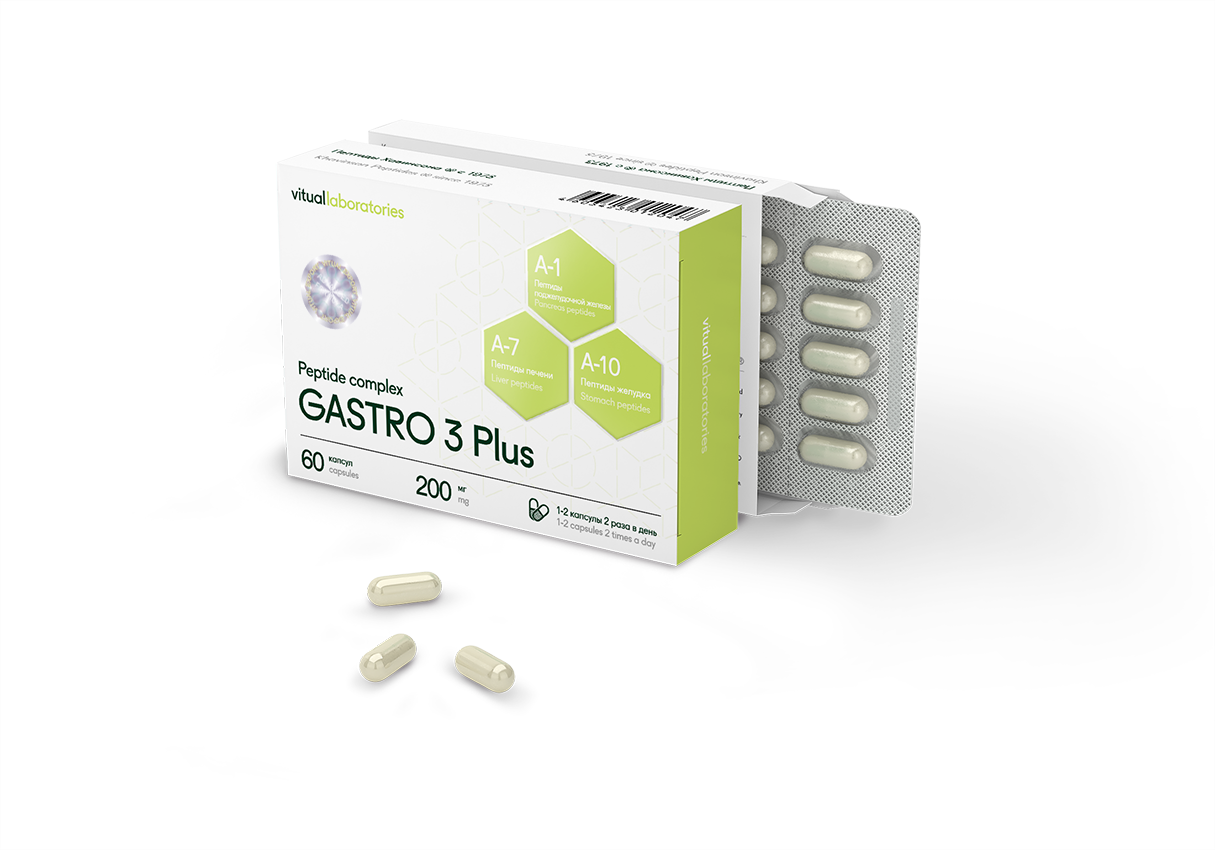
GASTRO 3 Plus significantly improves the functioning of the entire gastrointestinal tract.
It consists of 3 components.
The composition of the GASTRO 3 Plus complex is selected so as to regulate the activity of the glands of the digestive tract and maintain the smooth functioning of the gastrointestinal system.
Peptides – STOMACH
The stomach is a hollow muscular organ, the inner surface of which is covered with a mucous membrane. It contains glands that secrete protective mucus and hydrochloric acid.
Acid is necessary for the breakdown of proteins and the destruction of bacteria in food. However, excess hydrochloric acid can cause irritation and inflammation of the stomach, which negatively affects digestion.
Gastric peptides restore the gastric mucosa, normalize its motility and support enzyme activity.
Peptides – LIVER
The liver is the largest digestive gland in the body. Its cells synthesize vital proteins, and also store glucose and fat-soluble vitamins.
It regulates lipid balance, synthesizes cholesterol, lipoproteins and triglycerides – thus influencing the body’s tendency to thrombosis.
The liver is also a major organ for detoxification.
Liver peptides help lower cholesterol levels, improve lipid metabolism, normalize lipoprotein and liver enzyme levels, reduce inflammation, and stimulate liver cell regeneration.
Peptides – PANCREAS
The pancreas is an organ with digestive and hormonal functions. It produces enzymes that break down proteins, fats, and carbohydrates, and contains beta cells that synthesize insulin.
Insulin is essential for the transport of glucose into cells, and its deficiency can lead to diabetes.
Pancreatic peptides help normalize blood sugar levels, support repair processes in the pancreas, and regulate both its secretory and endocrine functions.