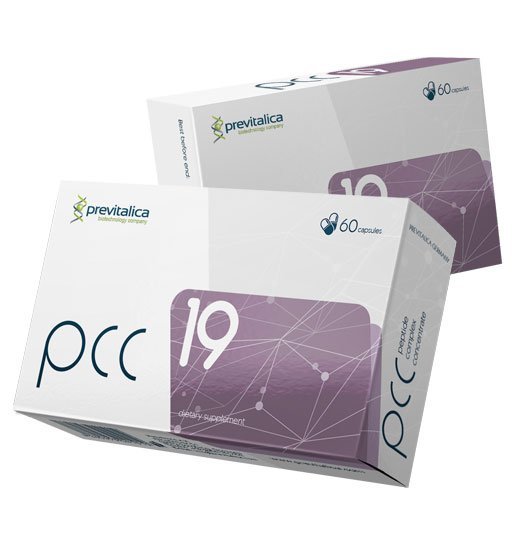

PCC-19 supports the cellular supply of lung peptides
PCC-19 – a dietary supplement with ultrafiltrate extract from the lungs of young animals.
2 capsules of PCC-19 (recommended daily dose) contain: ultrafiltrate extract from the lungs (contains a concentrate of peptide complex from the lungs) at least 20 mg.
The optimal functioning of the respiratory system in humans is directly related to the state of bronchial cells. The optimal function of bronchial cells, in turn, is closely related to the intensity of protein synthesis in these cells. Protein biosynthesis is a process of formation of new proteins in cells and, accordingly, a process of gene expression, which is of central importance for all living organisms and in which proteins are built from amino acids according to genetic information. This process is necessary for cells to grow and perform their most important functions. Proteins regulate all essential functions in the body.
Protein synthesis occurs efficiently in a young organism. Accordingly, organs and organ systems usually function well even in a young organism. During cellular protein metabolism, proteins are broken down into small fractions = peptides. These peptides regulate many cellular processes, including the cell cycle, gene expression (protein synthesis) and the response to oxidative stress.
In a young body with a normal intensity of protein synthesis, bronchial peptides are produced in sufficient quantities by the organism itself. Unfortunately, with age, and also under the influence of numerous harmful stress factors on the body, the intensity of protein synthesis decreases significantly. This means that the older we get or the greater the loads on the bronchi, the weaker the intensity of protein synthesis in bronchial cells. Under these conditions, fewer bronchial peptides are produced. As a result, various damage and dysfunctions in these cells can occur.
Missing regulatory bronchial peptides can be supplemented by the use of animal bronchial peptides. Scientists have found that missing peptides in a given tissue can be compensated for by animal peptides from the same tissue. Short peptides are identical in all mammals and humans. Animal bronchial peptides are perceived by the human body as endogenous. In addition, biological peptides have the so-called tissue specificity. This means that they can only penetrate cells from the tissue from which they originate. Lung peptides can only be absorbed by bronchial cells. They do not have mechanisms for interacting with other cells.
When using PCC-19, the pool of regulatory peptides of the lung tissue is enriched. The qualitative and quantitative availability of regulatory peptides in bronchial cells is important for the normal function of the bronchi and, accordingly, for the respiratory system as a whole.
The technology developed by our company allows the production of completely safe low-molecular fractions of animal lung tissues. During the technological process, the natural form of animal proteins is not changed. This ensures that lung peptides, which are transported through the bloodstream to bronchial cells, retain their high natural bioavailability.
PCC-19 dosage recommendation: for adults – 2 capsules daily before meals. We recommend taking for one month and repeating the use every 3 months.
PCC-19 storage recommendation: store in the original packaging, in a dry, light-protected place, at room temperature up to 25°C and out of reach of small children.
PCC-19 is intentionally free of unwanted or controversial emulsifiers, stabilizers, carriers, preservatives, superplasticizers, dyes, lactose and other cheap additives.
PCC = peptide complex concentrate.